
Species
The word "cetacean" is derived from the Latin Cetacea, the scientific name for the order of marine mammals that comprises whales, dolphins and porpoises. Two suborders of Cetacea exist today:
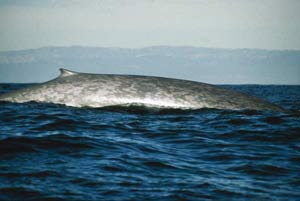
- Mysticeti, or baleen whales, are characterised by having baleen plates for filtering food from the water, rather than teeth. There are four families of baleen whales and all species of this suborder are relatively large or very large. The blue whale, reaching more than 30 metres and weighing more than 160 tons, is the largest animal ever to have lived on earth.
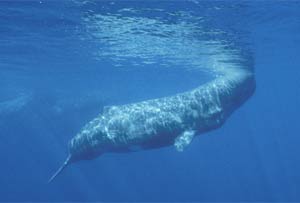
- Most Odontoceti, or toothed whales, are considerably smaller. They include dolphins, some of the world's most intelligent and social animals. The sperm whale, which can grow up to 20 metres long, is the only "large" toothed whale. The other toothed whales are summarized with the term "small cetaceans".
Today more than 80 species inhabit the world's oceans and river systems. Several of these commonly occur in the ASCOBANS Agreement Area, i.e. the North Sea, North East Atlantic, Irish Sea and, more rarely, in the Baltic. When the Agreement was drafted, it was decided that it would include only small cetaceans. For the purpose of the Agreement, "small cetaceans" means any species, subspecies or population of toothed whales (Odontoceti), except the sperm whale (Physeter macrocephalus).
Cetaceans are air-breathing mammals spending their entire life in the water. Accordingly, they have to come up to the surface regularly to breathe and have a range of physiological adaptations to allow deep and long-lasting dives. Cetaceans' primary oxygen reservoirs are the blood and muscles, and not the lungs as with most other mammals.
They live in a world where hearing is the dominating sense. Light diminishes rapidly with water depth. Accordingly, many cetaceans have evolved a sensory mechanism called echolocation. They use sound to navigate, communicate and to find food. Water transmits sound extremely efficiently. Toothed whales emit sounds from their or foreheads, which deflect off objects. Like bats, cetaceans use the echoes to "see the world around them".
The species displayed below are the more common species found in the Agreement Area. The list is not meant to be comprehensive!
| Scientific name | Common name | Class | Order | Family | CMS Instruments | CMS Appendix I | Appendix II |
|---|---|---|---|---|---|---|---|
| Delphinus delphis | Short-Beaked Common Dolphin | Mammalia | Cetacea | Delphinidae | , ASCOBANS , , , | ||
| Feresa attenuata | Pygmy Killer Whale | Mammalia | Cetacea | Delphinidae | ASCOBANS , , , | ||
| Globicephala macrorhynchus | Short-Finned Pilot Whale | Mammalia | Cetacea | Delphinidae | ASCOBANS , , , | ||
| Globicephala melas | Long-Finned Pilot Whale | Mammalia | Cetacea | Delphinidae | , , ASCOBANS , , | ||
| Grampus griseus | Risso's Dolphin | Mammalia | Cetacea | Delphinidae | , , ASCOBANS , , | ||
| Hyperoodon ampullatus | Northern Bottlenose Whale | Mammalia | Cetacea | Ziphiidae | , ASCOBANS , | ||
| Kogia breviceps | Pygmy Sperm Whale | Mammalia | Cetacea | Kogiidae | ASCOBANS , , , | ||
| Lagenorhynchus acutus | Atlantic White-Sided Dolphin | Mammalia | Cetacea | Delphinidae | , ASCOBANS | ||
| Lagenorhynchus albirostris | White-Beaked Dolphin | Mammalia | Cetacea | Delphinidae | , ASCOBANS | ||
| Mesoplodon bidens | Sowerby's Beaked Whale | Mammalia | Cetacea | Ziphiidae | ASCOBANS , , | ||
| Mesoplodon densirostris | Blainville's Beaked Whale | Mammalia | Cetacea | Ziphiidae | ASCOBANS ( ), ( ), , | ||
| Mesoplodon europaeus | Gervais' Beaked Whale | Mammalia | Cetacea | Ziphiidae | ASCOBANS , , | ||
| Mesoplodon mirus | True's Beaked Whale | Mammalia | Cetacea | Ziphiidae | ASCOBANS , , , | ||
| Orcinus orca | Killer Whale | Mammalia | Cetacea | Delphinidae | , , ASCOBANS , , | ||
| Phocoena phocoena | Harbour Porpoise | Mammalia | Cetacea | Phocoenidae | , ASCOBANS , , | ||
| Pseudorca crassidens | False Killer Whale | Mammalia | Cetacea | Delphinidae | , ASCOBANS , , | ||
| Stenella coeruleoalba | Striped Dolphin | Mammalia | Cetacea | Delphinidae | , ASCOBANS , , , | ||
| Steno bredanensis | Rough-Toothed Dolphin | Mammalia | Cetacea | Delphinidae | ASCOBANS , , , | ||
| Tursiops truncatus | Bottlenose Dolphin | Mammalia | Cetacea | Delphinidae | ASCOBANS , , , , | ||
| Ziphius cavirostris | Cuvier's Beaked Whale | Mammalia | Cetacea | Ziphiidae | ASCOBANS , , , , |