

FAQ on Whale and Dolphin Strandings
The CMS and ASCOBANS Secretariats periodically receive questions about whale, dolphin, and porpoise (cetacean) strandings and what can be done on such events. The following points aim to address the most common questions received and to explain the role of CMS and ASCOBANS in addressing cetacean strandings.
1) Why do cetaceans strand?
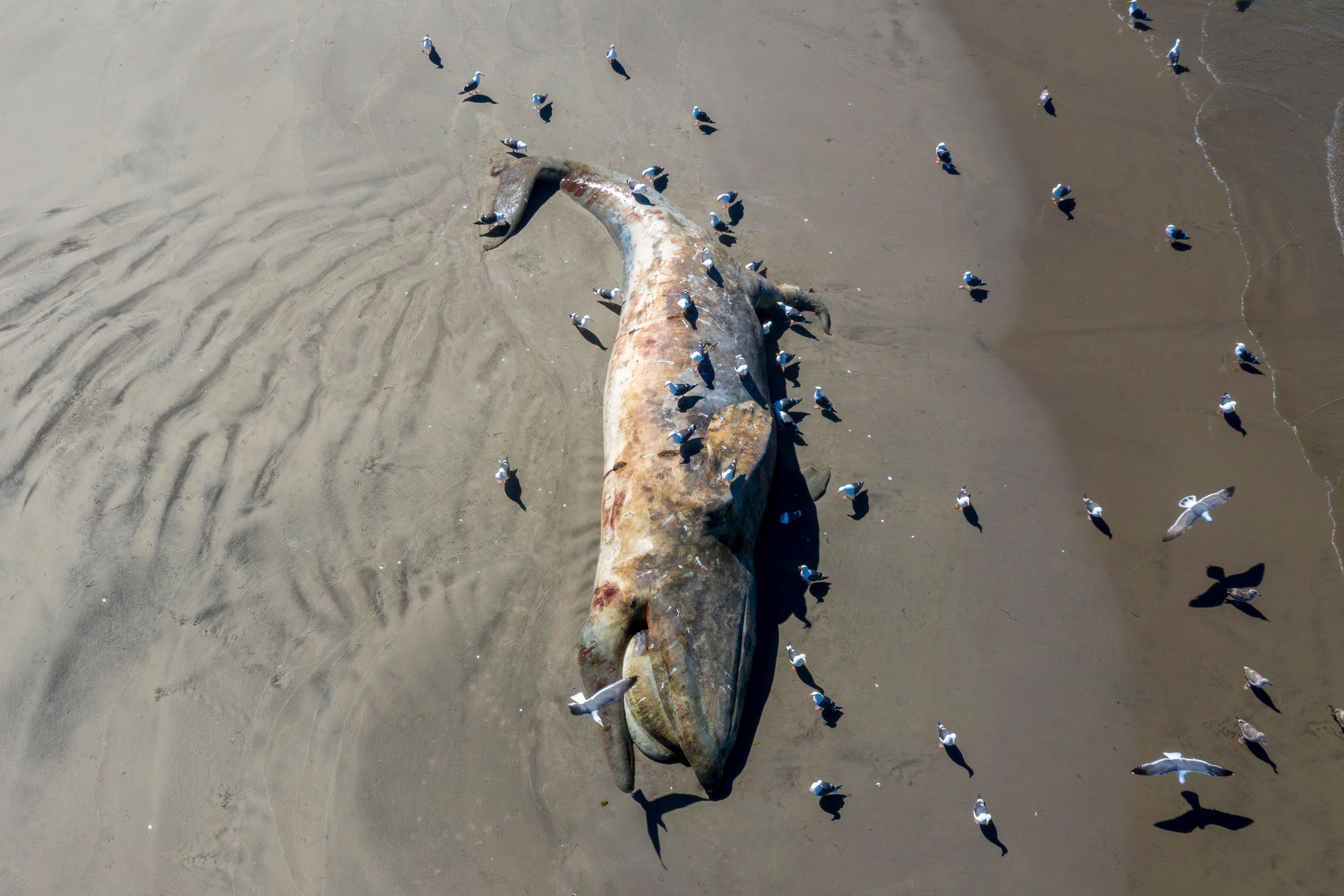
Cetacean strandings – when a whale, dolphin, or porpoise ends up on land (usually a beach) or in shallow water and cannot return to the sea on its own – of either live or dead animals have always occurred and are not unique to a specific country or coastal area. They can also be divided into mass strandings, where two or more individuals strand simultaneously, and individual strandings, which involve only one animal. The causes are not always easy to determine, as strandings can result from a multitude of issues:
- Navigational error: Cetaceans rely on echolocation and the Earth’s magnetic field for navigation. Natural or man-made disturbances to these mechanisms may cause animals to become stranded.
- Environmental factors: Coastal features, seabed topography, tides, and storms can disorient cetaceans and increase the risk of strandings.
- Group bonds: Strong social bonds can lead to mass strandings, as healthy individuals may follow sick or old group members to avoid leaving them behind.
- Health and age: Disease, injury, or old age may increase the likelihood of strandings. These conditions can occur naturally or be exacerbated by human impacts.
- Human activities: Numerous human activities in the marine environment affect cetaceans and can contribute to their strandings. These include increased underwater noise from commercial, industrial or military activities, entanglement in fishing gear, bycatch (accidental capture of a non-target species in fisheries), compromised health due to marine pollution, injuries from vessel strikes, and habitat degradation. which can contribute to cetacean strandings
Therefore, stranding can often be seen as the symptom of an underlying crisis. Accordingly, and depending on the state of the animal, not all individuals can be rescued. Animals that strand as a result of navigational error or temporary disorientation have a substantially better prognosis of survival after relocation than an animal with illness.
2) What can be done in cases of live cetacean strandings?
In the event of live strandings, guidelines and national organizations are available to provide help. An overview can be found on the ASCOBANS website and the IWC website. Additionally, stranding responders can contact the IWC Strandings Initiative for support, training and data provided by the IWC Strandings Expert Panel.
Depending on the animal’s size and health status, different measures of relief can be attempted by cetacean rescue experts. Small cetaceans can be carefully carried back into the water with the use of a tarpaulin. Medium-sized cetaceans such as pilot whales and minke whales will be rescued with whale refloatation equipment, which uses inflated pontoons. However, the weight of larger whales far exceeds the capacity of such equipment, and the use of heavy machinery risks severe additional injury. With this in mind, refloatation attempts should only be undertaken if the animal has a clear chance of survival to minimize further harm and suffering of the animal.
Example: The case of the humpback whale stranding in Germany in 2026
A juvenile humpback whale (Megaptera novaeangliae), publicly referred to as “Timmy” or “Hope”, stranded multiple times in March and April 2026 along the German coast of the Baltic Sea. It was entangled in fishing gear and experienced acute freshwater skin disease. While it was freed multiple times, the whale stranded again close to island of Poel, where it remained for 29 days.
A report commissioned by the German state of Mecklenburg-Vorpommern concluded on 7 April 2026 that the animal's chances of survival were negligible, and that further refloatation attempts would only cause additional suffering. This was reaffirmed on 21 April by the IWC Strandings Expert Panel. Therefore, it was advised to refrain from relocation or rescue attempts, indicating the potential for further harm to the animal and the immense level of stress any intervention would cause, given the whale’s already poor health status as well as its low chance of survival. Palliative care was advocated instead.
However, a private initiative attempted to relocate the whale to the North Sea. Using a barge, the whale was transported north of Skagen in Skagerrak, where it was released on 2 May 2026. On 14 May 2026, the whale was found dead just off the Danish island of Anholt.
3) Can CMS or ASCOBANS intervene directly in cases of cetacean strandings?
As a global environmental treaty, the Convention on the Conservation of Migratory Species of Wild Animals (CMS) fosters international collaboration, supports research, and develops conservation agreements and actions to ensure the long-term survival of migratory wild animal species and the ecosystems they depend on.
Accordingly, a number of cetacean species are listed under the Convention’s Appendices I (species requiring strict protection) and II (species needing international cooperation). This includes the humpback whale (Megaptera novaeangliae), the southern right whale (Eubalaena australis), the blue whale (Balaenoptera musculus) and many more.
The Agreement on the Conservation of Small Cetaceans of the Baltic, North East Atlantic, Irish and North Seas (ASCOBANS) was established through a CMS mandate, and functions much the same way as CMS at regional level. The aim of ASCOBANS is to promote close cooperation amongst countries that have joined the Agreement (Parties) with a view to achieving and maintaining a favorable conservation status for smaller species of toothed whales (Odontoceti). A Conservation and Management Plan, which forms part of the Agreement, obliges Parties to engage in habitat conservation and management, surveys and research, pollution mitigation and public information activities.
As organizations facilitating cooperation between governments, neither CMS nor ASCOBANS, have the personnel, funds, equipment or the mandate to intervene directly in places where these strandings happen around the globe. This work is generally done by local or national actors such as the government authorities of the country where the stranding has happened, and/or experts, volunteers, and relevant NGOs working on the ground.
The role of the Secretariats of both CMS and ASCOBANS is to support the Parties in their coordinated conservation efforts, particularly to reduce bycatch, underwater noise, and other man-made threats, in order to prevent future incidents as far as possible. The responsibility for implementing the Convention and Agreement lies with the Parties.
The Secretariats, however, commend the professionals who respond to these incidents under extremely challenging conditions, and stress that any intervention involving stranded protected species should be guided by expert advice.
Such cases underscore the urgent need to address the underlying drivers of strandings and to promote a more sustainable relationship with the marine environment, including reducing fisheries-induced mortality, removing fishing nets from protected areas, reducing underwater noise, and preventing vessel strikes and other human-caused pressures.
4) Can CMS or ASCOBANS conduct independent assessments of strandings?
Neither CMS nor ASCOBANS currently have the mandate to conduct such assessments.
5) How do CMS and ASCOBANS work to address the underlying threats that lead to strandings and similar incidents?
The factors that cause cetaceans to strand, such as entanglement in fishing gear, underwater noise, habitat degradation, and climate-related changes to prey distribution, are central to the work of CMS and ASCOBANS. Countries have adopted resolutions, aiming to protect migrating cetaceans and their habitats. Full list of CMS Resolutions is available here; and ASCOBANS Resolutions here.